Financial modelling for a social enterprise
For MQBS3010, our team proposed a trail-riding enterprise at Hillview Estate for The King’s Foundation. The proposal links inclusive employment and local tourism with UN SDG 8.
My finance contribution
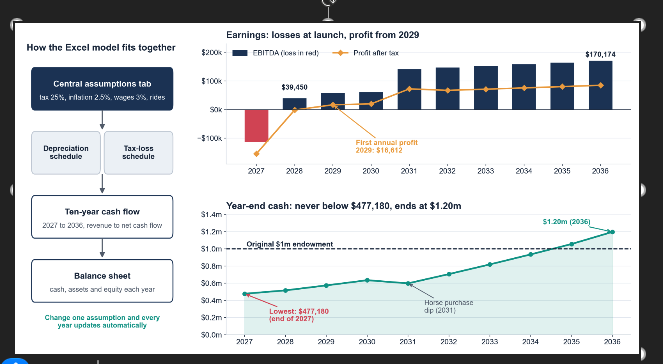
I built a ten-year Excel forecast using John’s accounting budget, linking shared assumptions to earnings and cash flow.
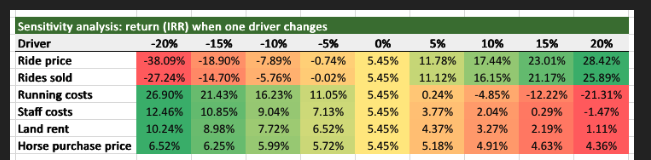
I tested prices, demand and costs to assess whether the venture could sustain its inclusive employment aims.
I assessed the proposed year-five horse purchase, surplus cash and options for continuing or handing over the venture.
- Messages exchanged
- 682+
- Unique Teams forum posts
- 30+
- Days of collaboration
- ~82
Teamwork & what I learned
John’s focus on protecting early cash challenged my preference for ownership. His feedback led us to recommend leasing first and considering a purchase if demand became established, to preserve cash for the proposed jobs.
I worked with Megan to turn customer and seasonal demand research into monthly ride estimates, and with Jayden to connect operating assumptions with financial feasibility. Weekly meetings and reconciliation with John’s budget kept our contributions connected.
Connecting customer research, cash constraints and operating assumptions taught me to question my own finance inputs.
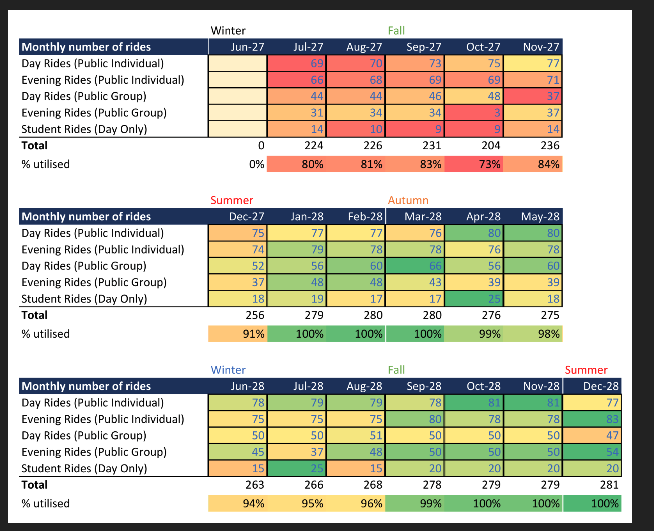
Building the model helped me explain how assumptions affect a recommendation. I would use that skill when learning to prepare vehicle finance quotations. The forecast exceeds ride capacity from 2029, so later projections need correcting before I rely on them. Testing one driver at a time also misses demand falling while costs rise.
Before my next recommendation, I’ll check ride capacity, test combined downside scenarios and ask a peer to review key assumptions. I’ll record the checks and changes, so the recommendation is supported by evidence and its limits are clear.